

Irrigation Software and Water Conservation: A Data-Driven Look
Water conservation has moved from a peripheral concern to a central factor in how irrigation systems are designed, permitted, and evaluated. Across the United States, municipalities are tightening outdoor water use restrictions, implementing landscape water budgets, and requiring documentation that demonstrates system efficiency. For irrigation contractors, this shift has practical consequences—and significant opportunities for those who are prepared.
The connection between professional irrigation software and meaningful water conservation is direct. Properly designed systems waste less water. And properly designed systems require tools that can verify performance before installation, not after.
The Scale of Outdoor Water Waste
The numbers around irrigation inefficiency are striking. According to the EPA, the average American household uses about 320 gallons of water per day, with roughly 30% dedicated to outdoor use. Of that outdoor water use, as much as 50% is estimated to be wasted through evaporation, runoff, and overwatering caused by poor system design or management.
At a national scale, that represents billions of gallons lost daily. At the project level, it means that a residential irrigation system designed without proper hydraulic verification and coverage analysis is likely underperforming from day one.
How Design Quality Affects Water Efficiency
The relationship between design quality and water efficiency operates through several mechanisms. Head-to-head coverage that is properly planned eliminates dry spots that prompt manual overwatering. Correct precipitation rate matching across zones prevents runoff on slopes and hardscapes. Accurate pipe sizing and pressure regulation ensure that each head delivers the intended flow rate—not more, not less.
These are not abstract engineering concepts. They are design decisions made at the plan stage that directly determine how a system performs across thousands of watering cycles over its operational life. Irrigation design software supports each of these decisions with tools that manual drafting cannot replicate at the same speed or accuracy.
Regulatory Pressure Is Increasing
Water-restricted regions, including much of the American Southwest, have implemented mandatory landscape water budgets and tiered pricing structures that penalize overuse. California, Arizona, Nevada, and Texas have all expanded outdoor water use regulations in recent years, with requirements that increasingly include documented irrigation design as part of permitting.
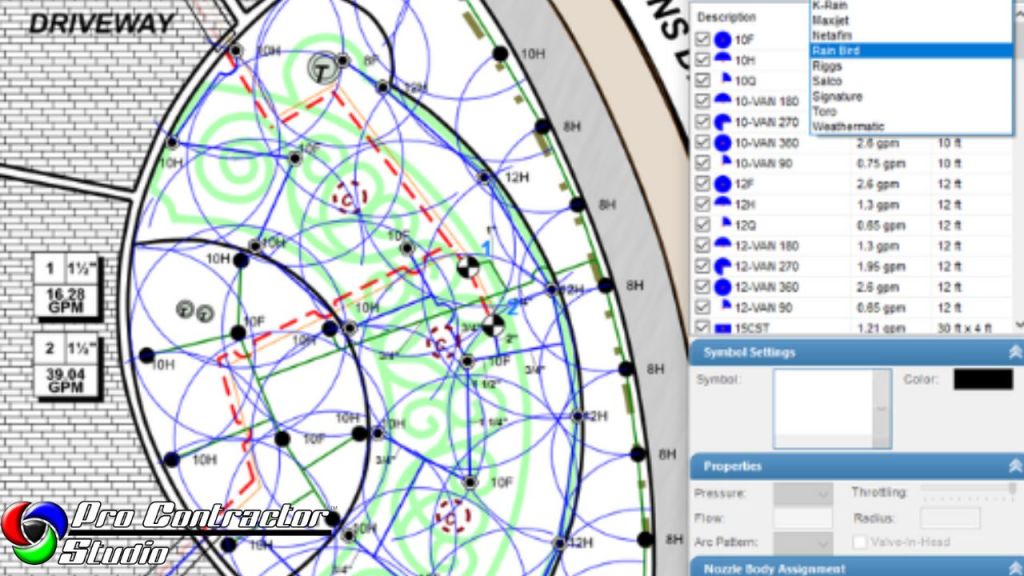
Contractors operating in these markets need design documentation that demonstrates hydraulic efficiency and zone-level compliance. Software tools that produce hydraulic reports, pipe schedules, and coverage data make that documentation straightforward to generate. Contractors without these capabilities face a growing disadvantage in permit-heavy markets.
Smart Controllers and Software Integration
The expansion of smart irrigation controllers—devices that adjust watering schedules based on real-time weather data, ET rates, and soil moisture levels—has added a new dimension to irrigation system design. A smart controller is only as effective as the system it manages. If the underlying hydraulic design is flawed, no amount of intelligent scheduling will compensate.
This has made the quality of base irrigation design more important, not less. Contractors who produce verified, accurate designs using professional software give smart controller systems the foundation they need to deliver on their conservation promises.
Quantifying the Conservation Benefit
The EPA’s WaterSense program estimates that irrigation efficiency improvements from proper design and smart control technology can reduce outdoor water use by 15% or more per household. Applied across a contractor’s full portfolio of residential clients, the cumulative conservation impact is substantial.
For contractors, this translates into a marketable capability—the ability to deliver systems that not only function correctly but demonstrate measurable water savings. In markets where water costs are rising and environmental expectations from clients are increasing, that capability supports differentiation and premium pricing.
Pro Contractor Studio, used by over 10,000 contractors and trusted in the field since 1989, provides the hydraulic calculations, pipe sizing tools, and coverage verification features that make water-efficient irrigation design achievable on every project—residential, commercial, or municipal.
Building a Conservation-Focused Practice
Contractors who position water efficiency as a core service offering are better aligned with where the market is heading. Documentation that demonstrates system performance, paired with design tools that verify efficiency before installation, creates a foundation for client relationships built on measurable outcomes.
The data is clear: professional irrigation software is not just a productivity tool. It is a water conservation tool—one that benefits clients, communities, and contractors who are serious about the quality of what they install.